
Gum disease is one of the most common oral health conditions in the United States, yet it is also one of the most frequently overlooked.
According to the Centers for Disease Control and Prevention, a significant proportion of American adults show signs of periodontal disease, and many are completely unaware. The reason is simple: in its early stages, gum disease is almost entirely painless.
At Manassas Dental Smiles, we believe that awareness is the first line of defense. Understanding the early warning signs of gum disease means you can seek care before the condition progresses into something far more difficult to treat.
In this guide, we walk you through what gum disease is, the key symptoms to watch for, the risk factors that raise your chances of developing it, and what we can do together to protect your smile.
What Is Gum Disease and Why Does It Matter?
Gum disease, clinically known as periodontal disease, is an inflammatory condition affecting the tissues and bone that support your teeth. It begins with gingivitis, a mild and reversible inflammation of the gums caused by the buildup of bacterial plaque along the gumline. If left untreated, gingivitis can advance to periodontitis, a more serious infection where the gums begin to pull away from the teeth, bone is lost, and teeth may eventually loosen and fall out.
Periodontitis is considered one of the two leading causes of tooth loss in adults, alongside tooth decay. Beyond oral health, research has consistently linked gum
disease to systemic conditions including cardiovascular disease, type 2 diabetes, respiratory illness, and complications in pregnancy.
This means the health of your gums is not just about your mouth; it reflects and influences your overall wellbeing.
The good news is that when caught early, gum disease is entirely reversible. That is why recognizing the signs and acting on them promptly is so important. At Manassas Dental Smiles, we see patients every week who are relieved to learn their gums can be restored to full health with the right care and attention.
The Early Warning Signs of Gum Disease
Because gum disease tends to develop quietly and without significant pain, many people miss the early symptoms. Here are the key signs that your gums may need professional attention.
1. Bleeding Gums When You Brush or Floss
This is the single most common early warning sign, and it is also the most frequently dismissed. Many people assume that a little blood during brushing is normal or a sign that they are brushing too hard. In reality, healthy gums do not bleed. Bleeding is a signal that your gum tissue is inflamed and irritated by bacterial plaque.
Research published in clinical studies of adult populations found that while over half of participants reported gingival bleeding, fewer than half recognised it as abnormal. This underlines how widely this important warning sign is misunderstood. If you notice any bleeding during your oral hygiene routine, it is worth bringing this to our attention at your next visit to Manassas Dental Smiles.
2. Red, Swollen, or Tender Gums
Healthy gum tissue is firm, pale pink, and fits snugly around the base of each tooth. When gum disease begins to develop, the gums become red or purplish, puffy, and tender to the touch. You may notice that your gums look different than usual or feel uncomfortable when you run your tongue along your gumline.
Swelling and redness are classic signs of inflammation, which is the body’s response to bacterial infection. At this stage, the damage is limited to the soft gum tissue, and with proper professional cleaning and improved oral hygiene, the condition can be fully reversed.
3. Persistent Bad Breath
Occasional bad breath after coffee or certain foods is entirely normal. However, bad breath that persists throughout the day, despite thorough brushing and rinsing, can be an indicator of gum disease. The bacteria responsible for periodontal infection produce volatile sulfur compounds, which have a distinctly unpleasant odour.
Chronic bad breath, also called halitosis, is often a sign that bacterial communities have established themselves below the gumline where your toothbrush cannot reach. If you or someone close to you has noticed that your breath is consistently unpleasant, a professional examination at Manassas Dental Smiles can identify whether gum disease is the underlying cause.
4. Gum Recession
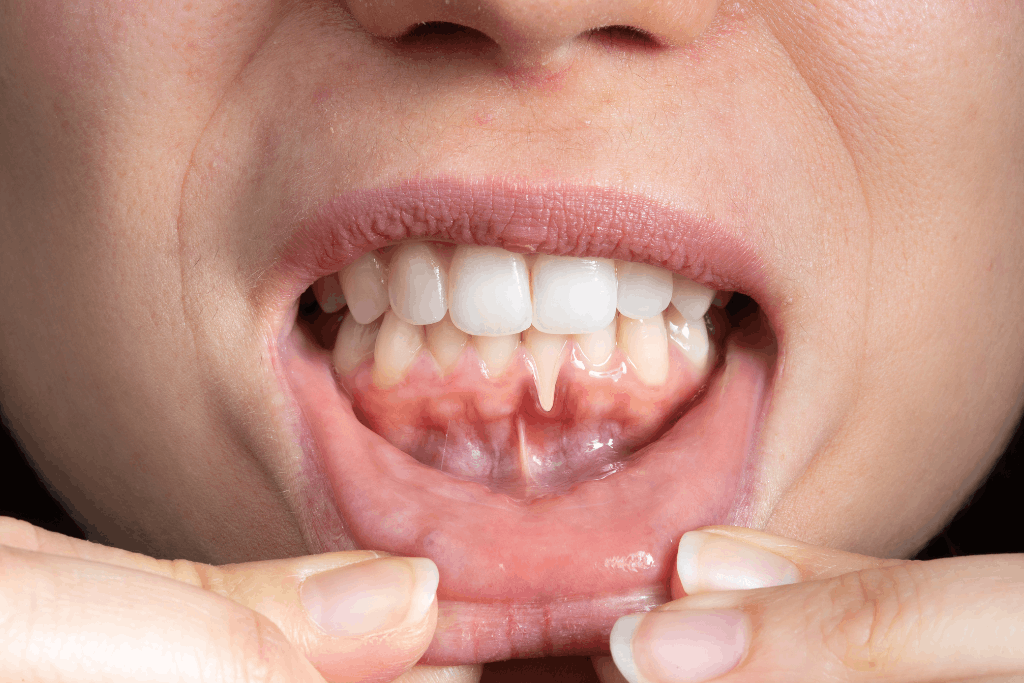
Gum recession occurs when the gum tissue gradually pulls away from the tooth, exposing more of the tooth root. You might notice this as teeth that appear longer than they used to, or as a visible notch near the gumline. Some patients also experience increased sensitivity to hot, cold, or sweet foods as the root surface becomes exposed.
Gum recession is often gradual and easy to miss without regular dental check-ups. It is a sign that the supporting structures around the teeth are being damaged. The sooner it is identified and treated, the better the chance of halting further tissue loss.
5. Loose or Shifting Teeth
In the early stages of gum disease, teeth are usually stable. However, as the condition progresses, the bone and connective tissue that anchor teeth in place are gradually destroyed. This can lead to teeth that feel slightly wobbly, or you may notice that your bite feels different than it used to, or that gaps are appearing between teeth that were previously close together.
If you notice any movement in your teeth that was not there before, this should be treated as an urgent sign to seek dental care. At Manassas Dental Smiles, we can assess the extent of any bone loss and develop a treatment plan to prevent further deterioration.
6. Increased Tooth Sensitivity
While sensitivity can have several causes, including enamel erosion and teeth grinding, sudden or worsening sensitivity to temperature or sweet foods can also indicate that gum recession has exposed the softer root surface of the tooth. The roots of your teeth are not protected by enamel, which means they are far more vulnerable to sensation when exposed.
Sensitivity paired with any of the other signs mentioned above warrants a comprehensive examination. Our team at Manassas Dental Smiles can determine the exact cause and provide targeted treatment.
7. Pus Around the Gumline
The appearance of pus between the gums and teeth is a sign of active infection and indicates that gum disease has progressed beyond the earliest stages. Pus may appear as a white or yellowish discharge around the base of one or more teeth, and it may be accompanied by a localized painful or pressure sensation.
This symptom requires prompt professional attention. If you notice pus around any of your teeth, please contact Manassas Dental Smiles without delay so we can assess and treat the infection.
Quick Reference: Early Gum Disease Warning Signs
|
Warning Sign |
What It Means |
|---|---|
|
Bleeding gums |
Inflamed gum tissue responding to bacterial plaque buildup along the gumline |
|
Red or swollen gums |
Classic early-stage inflammation; reversible with prompt professional care |
|
Persistent bad breath |
Bacterial sulfur compounds produced below the gumline |
|
Gum recession |
Gum tissue pulling away, exposing root surfaces and increasing sensitivity |
|
Loose or shifting teeth |
Bone and connective tissue loss undermining tooth support |
|
Increased sensitivity |
Root surface exposure due to gum recession |
|
Pus at the gumline |
Active bacterial infection requiring urgent professional treatment |
Who Is Most at Risk of Developing Gum Disease?
Anyone can develop gum disease, but certain factors significantly increase the likelihood. Understanding your personal risk profile helps you and our team at Manassas Dental Smiles tailor a preventive plan that suits your specific needs.
- Smoking and tobacco use: Tobacco is one of the strongest risk factors for gum disease. It impairs blood flow to the gums, reduces the mouth’s ability to heal, and can mask the bleeding that would otherwise serve as an early warning.
- Diabetes: People with poorly controlled blood sugar are significantly more susceptible to infection, including gum infection. Gum disease in turn can make blood sugar harder to manage, creating a difficult cycle.
- Poor oral hygiene: Infrequent brushing, insufficient flossing, and skipping professional cleanings allow plaque and tartar to accumulate, providing the environment in which gum disease thrives.
- Certain medications: Some medications reduce saliva flow, making the mouth drier and more vulnerable to bacterial overgrowth. Others can cause gum tissue to overgrow, increasing the risk of inflammation.
- Hormonal changes: Pregnancy, puberty, and menopause can all affect gum tissue and make it more susceptible to inflammation, even with consistent oral hygiene.
- Genetics: Some individuals are genetically predisposed to gum disease, regardless of how well they care for their teeth. If gum disease runs in your family, more frequent check-ups are advisable.
- Age: The risk of gum disease increases with age. Regular professional monitoring becomes increasingly important as we get older.
How Gum Disease Is Treated
The treatment approach for gum disease depends on how far it has progressed. This is why early detection matters so profoundly; catching the condition at the gingivitis stage means the simplest interventions can restore full gum health.
For early-stage gingivitis, a professional cleaning known as prophylaxis removes the plaque and tartar that home brushing cannot eliminate. Combined with consistent brushing twice daily, daily flossing, and the use of an appropriate antibacterial mouthrinse, this is often sufficient to fully reverse the condition.
If the disease has progressed to periodontitis, a deeper cleaning procedure called scaling and root planing is typically required. This involves carefully cleaning the surfaces of the tooth roots below the gumline to remove bacteria and calculus deposits, allowing the gum tissue to reattach and heal. More advanced cases may require referral to a periodontist or additional clinical procedures.
|
How Manassas Dental Smiles Can Help You
|
Preventing Gum Disease: Everyday Steps That Make a Real Difference
Prevention is always preferable to treatment, and the daily habits you build at home are just as important as the professional care we provide. Here is what we recommend to every patient at Manassas Dental Smiles.
- Brush your teeth at least twice a day using a soft-bristled toothbrush and fluoride toothpaste, paying particular attention to the gumline.
- Floss at least once daily to remove plaque and food debris from between the teeth and just below the gumline where your toothbrush cannot reach.
- Use an antibacterial mouthrinse as an adjunct to brushing and flossing, not as a replacement for either.
- Attend dental check-ups and professional cleanings at least every six months, or more frequently if you have a higher risk profile.
- If you smoke, seek support to quit. Stopping tobacco use is one of the most impactful changes you can make for your gum health and your overall health.
- Maintain a balanced diet low in added sugars, as sugars feed the bacteria responsible for plaque formation.
- Stay well hydrated, as a moist oral environment helps neutralise acids and wash away food particles.
If you are unsure about your current gum health, the best step you can take is to book an appointment with us. At Manassas Dental Smiles, we conduct a thorough periodontal assessment as part of every routine examination, which means any early changes are identified and addressed before they have the chance to progress.
Frequently Asked Questions
Can gum disease be reversed completely?
Yes, if it is caught at the gingivitis stage. Gingivitis is fully reversible with a professional cleaning and an improved home care routine. Once the condition has progressed to periodontitis and bone loss has occurred, it cannot be fully reversed, but it can be effectively managed and stabilised with the right treatment. This is why early detection through regular dental visits is so valuable.
Is gum disease painful?
One of the most dangerous aspects of gum disease is that it is largely painless, particularly in the early stages. Most patients have no idea the condition is developing until a professional examination reveals it. This is why we strongly encourage attending routine check-ups even when you feel no discomfort in your mouth. At Manassas Dental Smiles, we screen for gum disease at every visit.
How often should I have my gums professionally checked?
For most adults with good general oral health, a check-up and professional cleaning every six months is recommended. However, if you have a history of gum disease, smoke, have diabetes, or have other risk factors, we may recommend more frequent visits, typically every three to four months. Our team will advise you on the schedule that is right for your individual situation.
My gums bleed when I floss. Should I stop flossing?
No. Stopping flossing because your gums bleed is one of the most common mistakes patients make. Bleeding gums are a sign of inflammation, and the inflammation is caused by plaque that has accumulated precisely where flossing reaches. Consistent, gentle daily flossing will typically reduce bleeding within a few weeks as the gum tissue becomes healthier. If bleeding persists after two to three weeks of consistent flossing, please let us know.
Can children develop gum disease?
Yes, children can develop gingivitis, though periodontitis is much less common in younger patients. Good oral hygiene habits established in childhood provide a strong foundation for lifelong gum health. At Manassas Dental Smiles, we provide family dental care and can advise parents on age-appropriate brushing techniques and monitoring for early signs of gum problems in children.
Does gum disease affect my overall health?
Research strongly suggests that it does. Gum disease has been associated with increased risk of cardiovascular disease, complications in diabetes management, respiratory conditions, and adverse pregnancy outcomes including premature birth and low birth weight. While the precise nature of these connections is still being studied, the evidence for a link between poor gum health and systemic health is substantial. Treating gum disease is therefore an investment in your whole-body health.