
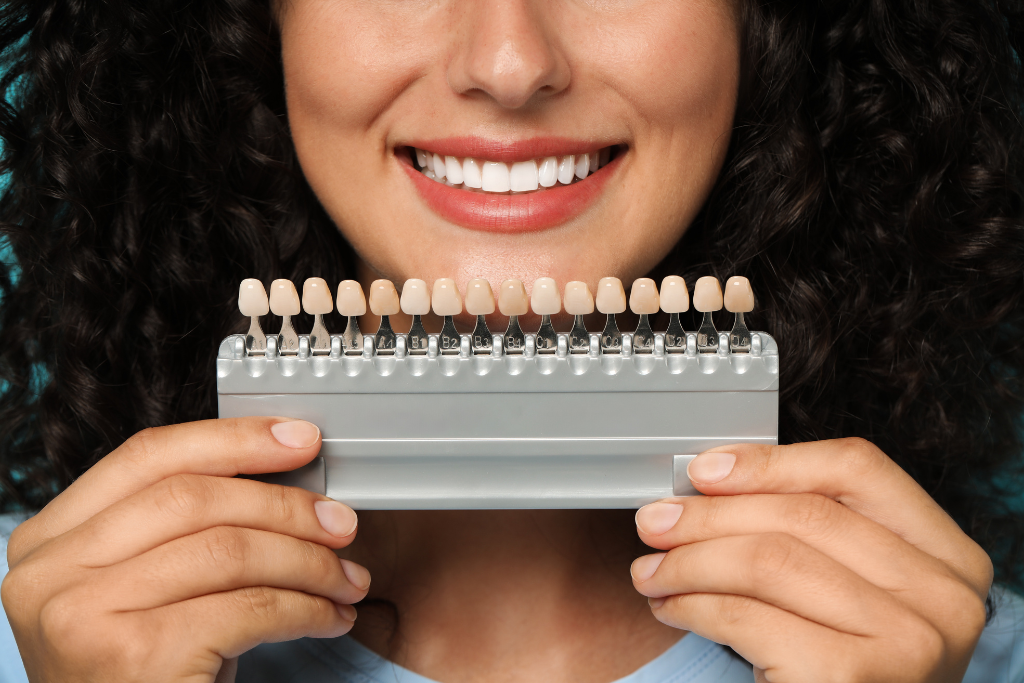
You want a smile you can feel confident about — but you’re not sure whether dental bonding or porcelain veneers are the right path to get there. It’s one of the most common questions we hear at Manassas Dental Smiles, and for good reason.
Both are effective, minimally invasive cosmetic treatments. Both can correct chips, discolouration, gaps, and uneven teeth. But they’re not interchangeable — and choosing the wrong one can cost you time, money, and results that fall short of what you had in mind.
In this guide, we walk you through exactly how each treatment works, who it’s best suited for, and how to make the decision that fits your smile goals and your budget. Let’s start from the beginning.
What Is Dental Bonding?
Dental bonding is a cosmetic procedure in which a tooth-coloured composite resin is applied directly to the surface of a tooth, shaped by hand, and hardened with a curing light. The result is a natural-looking correction that blends seamlessly with the surrounding teeth.
At Manassas Dental Smiles, we use dental bonding to address a range of cosmetic concerns, including:
- Chipped or cracked teeth
- Gaps between teeth (diastema)
- Discolouration that whitening cannot fix
- Slightly misshapen or uneven teeth
- Minor recession exposing the root surface
The treatment is typically completed in a single appointment and requires little to no removal of existing tooth enamel. That makes it one of the most conservative cosmetic options available — and one we frequently recommend as a starting point for patients who want real results without committing to a more involved procedure.
What Are Dental Veneers?
Porcelain veneers are ultra-thin shells — typically around 0.5 mm thick — custom-fabricated in a dental laboratory and permanently bonded to the front surface of your teeth. They require a small amount of enamel to be removed during preparation so the veneer sits flush and looks natural.
Veneers are considered a long-term cosmetic investment. Because the process involves permanently altering the tooth structure, the decision is irreversible — once enamel is removed, the tooth will always need to be covered. That said, for patients with more significant cosmetic concerns or those seeking a complete smile transformation, veneers deliver results that composite bonding simply cannot match.
Our team at Manassas Dental Smiles — including Dr. Malik Usman, Dr. Ehab BenNasir, and Dr. Abdul Majeed — assesses every veneer candidate carefully. We take impressions, discuss shade options, and work with precision to ensure the final result looks and feels like your natural teeth.
Bonding vs. Veneers: A Side-by-Side Comparison
Here is how the two treatments compare across the factors that matter most to our patients:
Cost
Dental bonding is the more affordable option. In the US, composite bonding typically costs between $300 and $600 per tooth. Porcelain veneers, on the other hand, range from $900 to $2,500 per tooth depending on location, material, and the complexity of the case.
Neither treatment is typically covered by dental insurance when performed purely for cosmetic purposes, though bonding used to restore a damaged tooth may qualify for partial coverage. At Manassas Dental Smiles, we discuss cost transparently during your consultation and help you explore financing options where appropriate.
Durability and Lifespan
Porcelain veneers last significantly longer than composite bonding. With proper care, veneers can last 10 to 20 years. Composite bonding typically lasts between 3 and 7 years before it needs to be repaired or replaced, largely because the resin material is more porous and susceptible to staining and chipping over time. That said, bonding is far easier and less costly to repair — a meaningful advantage for patients who want flexibility.
Procedure Time
Bonding is completed in a single visit — usually 30 to 60 minutes per tooth. Veneers require at least two appointments: one for preparation and impressions, and a second (usually two to three weeks later) to fit and bond the final restorations. Some practices now offer same-day veneers using in-house milling technology, but traditional lab-fabricated porcelain remains the gold standard for aesthetics.
Aesthetics
Both treatments look natural when done well. However, porcelain has an optical quality that more closely mimics natural tooth enamel — it reflects light in the same way, which makes high-quality veneers virtually indistinguishable from real teeth. Composite resin can also look excellent, particularly in skilled hands, but it is more likely to discolour over time compared to porcelain.
Reversibility
Bonding is reversible in that no tooth structure is permanently removed. If you change your mind or want to upgrade to veneers later, that remains an option. Veneers are not reversible — once enamel is removed, you are committed to having the tooth covered for life. This is one of the most important factors we discuss with patients at Manassas Dental Smiles before recommending veneers.
Maintenance
Both treatments require regular brushing, flossing, and routine dental check-ups. With bonding, patients should avoid biting fingernails, chewing ice, or using their teeth to open packaging — habits that accelerate chipping. With veneers, a night guard is often recommended for patients who grind their teeth. At Manassas Dental Smiles, we provide personalised aftercare guidance for both treatments.
Who Is a Good Candidate for Each Treatment?
Choose Bonding If You:
- Have minor cosmetic concerns (small chips, surface stains, slight gaps)
- Want results with no enamel removal and no waiting period
- Are on a tighter budget or want to trial cosmetic enhancement before committing to veneers
- Need a single tooth corrected rather than a full-smile transformation
- Are younger and still deciding on long-term cosmetic plans
Choose Veneers If You:
- Have multiple teeth with cosmetic imperfections you want corrected uniformly
- Want long-lasting results and are prepared to invest accordingly
- Have significant discolouration that does not respond to whitening
- Are looking for a complete smile makeover with consistent shape, size, and shade
- Have good overall oral health with sufficient enamel remaining
At Manassas Dental Smiles, we never push one treatment over the other. Our goal is to understand what you want from your smile and recommend the path that genuinely gets you there.
What About Composite Veneers? Is There a Middle Ground?
Yes. Composite veneers — sometimes called direct veneers — use the same resin material as bonding but are applied in a thicker, more uniform layer across the whole tooth surface. They offer a middle-ground option: more coverage and consistency than standard bonding, but without the cost or permanence of porcelain veneers.
They are particularly popular with patients who want a smile refresh on a limited budget, or who want to “test drive” a veneer look before committing to porcelain. The downside is that they share the same longevity and staining limitations as composite bonding.
How We Help You Make the Decision at Manassas Dental Smiles
We believe cosmetic dentistry should be a conversation, not a prescription. When you come into our practice at 8559 Sudley Road, Manassas, VA, our first priority is to listen. We want to understand what bothers you about your current smile, what kind of results you’re hoping for, and what constraints — time, budget, reversibility — matter to you.
From there, we carry out a clinical assessment that looks at:
- The condition and thickness of your existing enamel
- Your bite alignment and jaw function
- The number of teeth involved
- Your oral health baseline (any active decay or gum disease is addressed first)
- Your aesthetic goals and lifestyle factors
Only after gathering all of that information do we make a recommendation. And if the answer genuinely is “either could work for you,” we’ll be honest about that too — and help you weigh the trade-offs so you can decide.
Our team — Dr. Malik Usman, Dr. Ehab BenNasir (DDS, MSD), and Dr. Abdul Majeed — brings both clinical experience and a genuine commitment to patient education. We’ve helped thousands of patients in the Manassas area achieve smile results they are proud of, and we’d love to do the same for you.
Caring for Your Results Long-Term
Whichever treatment you choose, your results will only last as long as your home care supports them. Here is what we recommend to all cosmetic dentistry patients at Manassas Dental Smiles:
- Brush twice daily with a non-abrasive toothpaste
- Floss at least once a day to protect the margins around bonded or veneered teeth
- Avoid foods and drinks that stain heavily — coffee, red wine, and dark berries are the main culprits (especially with bonding)
- Schedule a professional clean and check-up every six months so we can catch any early issues
- If you grind your teeth, wear the night guard we provide — it will protect your investment significantly
Ready to Transform Your Smile? We're Here to Help
Whether you’re leaning toward bonding, veneers, or still weighing your options, the best next step is a conversation with our team. At Manassas Dental Smiles, we combine clinical expertise with genuine care for every patient who walks through our door.
Book your cosmetic consultation today. Call us at (571) 350-9292, email care@manassasdentalsmiles.com, or visit us at 8559 Sudley Road, Manassas, VA 20110. We’d love to help you find the smile you’ve been looking for.
FAQs
Is dental bonding painful?
No. In most cases, dental bonding does not require anaesthesia and causes no discomfort. The resin is applied to the surface of the tooth and shaped without drilling into the tooth structure. Some patients experience mild sensitivity for a day or two after treatment, but this resolves quickly.
How long does dental bonding last?
Composite bonding typically lasts between 3 and 7 years with proper care. The lifespan depends on the location of the bonded tooth, your bite, and your daily habits. Bonding on front teeth that isn't subject to heavy bite forces tends to last longer. At Manassas Dental Smiles, we review the condition of bonded teeth at every routine check-up.
Do veneers look fake?
Not when done correctly. The "fake" look associated with veneers is usually the result of poorly designed or excessively white restorations. At Manassas Dental Smiles, we work with patients to select a shade and shape that complements their facial features and looks genuinely natural. Modern porcelain is highly lifelike in how it catches and reflects light.
Can I whiten bonded teeth or veneers?
Composite resin and porcelain do not respond to whitening treatments the way natural enamel does. This means that if you plan to whiten your teeth, it's best to do so before bonding or veneers are placed, so that the restorations can be shade-matched to your whitened teeth. We always advise patients on the correct sequencing of cosmetic treatments during their consultation.
How much do veneers cost at Manassas Dental Smiles?
Costs vary depending on the number of teeth, the type of porcelain selected, and the complexity of the case. We provide a full, transparent cost breakdown during your consultation with no obligation. Call us at (571) 350-9292 or book an appointment online to get started.
Are veneers covered by dental insurance?
Porcelain veneers placed for cosmetic reasons are not typically covered by dental insurance. However, if a veneer is being used to restore a structurally damaged tooth, partial coverage may apply. Our team can help you review your insurance benefits and explore payment options to make treatment accessible.
Can I get bonding and veneers at the same time?
Yes. Some patients choose to veneer the most visible teeth and use bonding for minor corrections on others. This can be a cost-effective approach, and we can design a treatment plan that combines both where it makes clinical and aesthetic sense.