
When most people think about protecting their teeth, they think about brushing twice a day, flossing, and scheduling routine check-ups. All of that matters enormously, and at Manassas Dental Smiles, we support every single one of those habits. But there is another factor that shapes your oral health every day, multiple times a day, and it is sitting right on your plate.
Your diet has a profound and direct impact on the health of your teeth and gums. The foods and drinks you consume either strengthen your mouth’s natural defences or quietly erode them. Understanding that relationship does not just help you make smarter choices at the supermarket; it helps you protect your smile for life.
In this guide, our team at Manassas Dental Smiles breaks down the science of diet and oral health in plain, practical terms. We cover the best foods for strong teeth and healthy gums, the ones that do the most damage, and the habits that make the biggest difference between check-ups.
Why What You Eat Matters to Your Teeth
Every time you eat or drink, you set off a chain reaction inside your mouth. Bacteria naturally present in your mouth feed on the sugars and starches in your food and produce acids as a by-product.
Those acids attack the enamel on the surface of your teeth, the hard outer layer that protects them from decay. Over time, repeated acid attacks cause enamel to weaken and break down, leading to cavities, sensitivity, and ultimately tooth loss if left untreated.
The 2020-2025 Dietary Guidelines for Americans identified dental caries (tooth decay) as a major diet-related chronic disease of public health concern. That framing puts diet squarely at the centre of preventive dental care, and it reflects what we see in practice at Manassas Dental Smiles every single day.
The good news is that the relationship between diet and oral health is bidirectional. Just as poor dietary choices accelerate decay and gum disease, the right choices actively support enamel strength, gum tissue health, and the natural remineralisation that keeps your teeth resilient. We can use food as medicine for our mouths, and we think that is genuinely exciting.
Foods That Are Good for Your Teeth
1. Dairy Products: Calcium and Casein for Strong Enamel
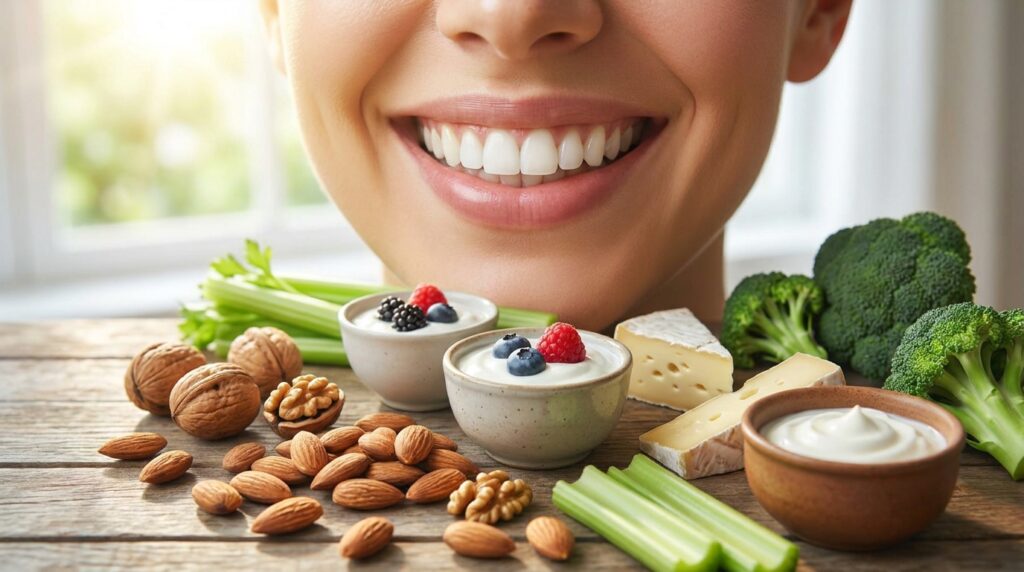
Milk, cheese, and yoghurt are among the most tooth-friendly foods you can eat. They are rich in calcium and phosphate, which directly support the remineralisation of tooth enamel. Cheese in particular has been shown to help neutralise acid in the mouth after meals, making it an excellent follow-up to acidic foods or drinks. Research cited by the American Dental Association (ADA) notes that dairy products have cariostatic properties, meaning they actively help resist decay.
If you are lactose intolerant or follow a plant-based diet, calcium-fortified alternatives such as almond milk or oat milk can offer similar mineral benefits, though without the casein protein that gives dairy its particular enamel-protecting properties.
2. Leafy Greens: Vitamins That Guard Your Gums
Spinach, kale, broccoli, and other leafy greens are packed with vitamins A, C, and B, as well as calcium, folate, and fibre. Vitamin C is particularly important because it plays a central role in collagen production, which is a key building block of gum tissue. A diet low in vitamin C has been linked to increased susceptibility to gum disease. Vitamin A supports saliva production and the maintenance of mucous membranes that line the mouth.
At Manassas Dental Smiles, we consistently encourage patients to think of their gum health as connected to their overall nutritional status. Gum disease is not simply a consequence of poor brushing; it is often accelerated by nutritional deficiencies. A diet rich in leafy greens helps address both.
3. Crunchy Fruits and Vegetables: Nature’s Toothbrush
Apples, carrots, celery, and cucumbers do double duty for your oral health. Their firm, fibrous texture acts like a natural scrub against tooth surfaces, helping to dislodge food particles and stimulate saliva flow. Saliva is your mouth’s most effective natural defence mechanism; it neutralises acids, washes away debris, and delivers calcium and phosphate back to tooth surfaces.
Apples, while slightly sweet, contain enough water and fibre to dilute their sugar content significantly. Crunching through an apple at lunchtime is not the same as eating a caramel. The mechanical action, the water content, and the fibre all work in your favour.
4. Nuts and Seeds: Nutrient-Dense and Low in Sugar
Almonds, walnuts, and sesame seeds are low in sugar and high in calcium, phosphorus, and healthy fats. Almonds in particular are a great snack option for oral health because they provide meaningful calcium without the sugar load that drives acid production. They also require significant chewing, which boosts saliva output.
5. Water: The Single Best Drink for Your Teeth
Plain water, particularly fluoridated tap water, is the gold standard drink for oral health. Fluoride is a mineral that strengthens enamel and makes teeth more resistant to acid attack. Drinking water between meals and after eating helps rinse food particles from the mouth and dilute residual acids. The ADA recommends fluoridated water as a core component of a tooth-friendly diet.
At Manassas Dental Smiles, one of the simplest things we encourage patients to do is swap one daily soda or juice for a glass of water. Over weeks and months, that shift makes a meaningful difference to the acid load your teeth have to handle.
6. Green and Black Tea: Polyphenols That Fight Bacteria
Unsweetened green and black teas contain polyphenols that interact with the bacteria responsible for plaque formation and tooth decay. These compounds help suppress bacterial growth and reduce acid production in the mouth. Tea also contains naturally occurring fluoride. Of course, these benefits apply to unsweetened tea only; adding sugar negates them entirely.
|
Foods to Eat
|
Foods to Limit or Avoid
|
Foods and Drinks That Harm Your Oral Health
1. Sugary Foods and Sweets
Sugar is the primary fuel for the acid-producing bacteria in your mouth. Every time you eat something sweet, those bacteria go to work and your enamel pays the price. The frequency of sugar consumption matters at least as much as the total quantity. Sipping a sugary drink slowly over two hours does considerably more damage than drinking the same amount in one sitting, because it keeps your teeth in a near-constant state of acid attack.
Sticky sweets like caramel, toffee, and gummy candies are particularly problematic because they adhere to tooth surfaces and are difficult to clear through normal chewing or saliva. They create prolonged contact between sugar and enamel, increasing the risk of decay significantly.
2. Carbonated Drinks and Sodas
Sodas and fizzy drinks are harmful on two counts: they are high in sugar and they are highly acidic, with pH levels well below the threshold at which enamel begins to erode. Diet sodas, while sugar-free, are still acidic and still carry an erosion risk. The combination of acidity and sugar in standard soft drinks makes them among the most damaging substances your teeth regularly encounter.
3. Citrus Fruits and Acidic Foods in Excess
Citrus fruits like lemons, oranges, and grapefruit contain beneficial vitamins, but their high acid content can soften enamel over time if consumed frequently or without mitigation. The key is not to avoid them entirely but to consume them as part of a meal rather than on their own. Drinking lemon water throughout the day, for example, keeps your enamel in a prolonged acid environment. Rinsing with plain water after eating acidic foods significantly reduces the risk.
4. Refined Carbohydrates and Starchy Snacks
White bread, crackers, crisps, and pretzels break down into simple sugars almost immediately in the mouth. Because they are soft and starchy, they tend to pack into the spaces between teeth and around the gumline, where they feed bacteria for extended periods. Many patients are surprised to learn that a bag of pretzels can be as problematic for cavity risk as a small bag of sweets.
5. Alcohol and Coffee
Alcohol reduces saliva production, leading to dry mouth. When saliva flow is reduced, the mouth loses its primary natural cleaning and buffering mechanism, allowing bacteria to proliferate and acids to linger. Coffee, particularly in high quantities, can stain teeth and dry out the mouth as well. Black coffee in moderate amounts is less harmful than sweetened coffee drinks, but staying hydrated with water alongside any caffeinated beverage remains important.
|
Practical Oral Health Habits Between Brushing
|
The Broader Picture: Nutrition and Gum Disease
The impact of diet on oral health extends beyond cavities. Gum disease, which is a leading cause of tooth loss in adults, is also significantly influenced by nutritional status. Diets rich in vitamins A, B, C, calcium, and zinc have been shown to help prevent gum disease and support the health of the tissues that hold teeth in place.
Research suggests that gum disease may progress faster and reach greater severity in individuals with poor nutritional intake. This means that protecting your gums is not solely a matter of daily flossing, though that absolutely matters. It is also about ensuring your body has the micronutrients it needs to maintain and repair soft tissue.
At Manassas Dental Smiles, our hygienists routinely discuss nutrition during appointments when we identify patterns that suggest dietary factors may be contributing to gum inflammation or increased cavity risk. We treat the whole patient, not just the tooth in front of us.
When to See Your Dentist
Adjusting your diet is a powerful preventive tool, but it works best alongside regular professional care. We recommend visiting Manassas Dental Smiles at least twice a year for a routine examination and professional clean. These appointments allow us to remove built-up tartar that diet and brushing cannot address, check for early signs of decay or gum disease, and give you personalised dietary guidance based on what we see in your mouth.
If you are experiencing tooth sensitivity, notice discolouration, feel any discomfort when eating certain foods, or cannot remember when you last saw a dentist, now is the right time to book. Dental issues caught early are almost always simpler and less costly to treat.
|
Why Patients Choose Manassas Dental Smiles
|
Frequently Asked Questions
Yes, significantly. Reducing your intake of added sugars and acidic drinks directly lowers the frequency and intensity of acid attacks on your enamel. Increasing calcium-rich foods, drinking more water, and limiting between-meal snacking are all evidence-based dietary strategies for reducing cavity risk. At Manassas Dental Smiles, we work with patients to make these changes feel practical and sustainable rather than restrictive.
Even 100% natural fruit juices are high in natural sugars and often quite acidic. When consumed frequently, they expose your teeth to the same kind of acid erosion risk as sodas. We recommend drinking juice with meals rather than sipping it throughout the day and following it with a glass of plain water. Whole fruit is always preferable because fibre slows sugar absorption and chewing stimulates saliva.
Yes. Cheese helps raise the pH level in the mouth, neutralising acids that can erode enamel. It is also rich in calcium and casein protein, both of which help support stronger teeth.
If you have consumed acidic foods or drinks, wait at least 30 minutes before brushing. Acid temporarily softens enamel, and brushing immediately can cause damage. Rinsing with water first is the safest option.
Yes, provided it carries the ADA Seal of Acceptance. Sugar-free gum stimulates saliva production, helping neutralise acids, wash away food particles, and support remineralisation.
We recommend visiting Manassas Dental Smiles twice a year for a routine examination and professional cleaning. Dietary improvements help reduce risk, but professional care remains essential for maintaining long-term oral health.