
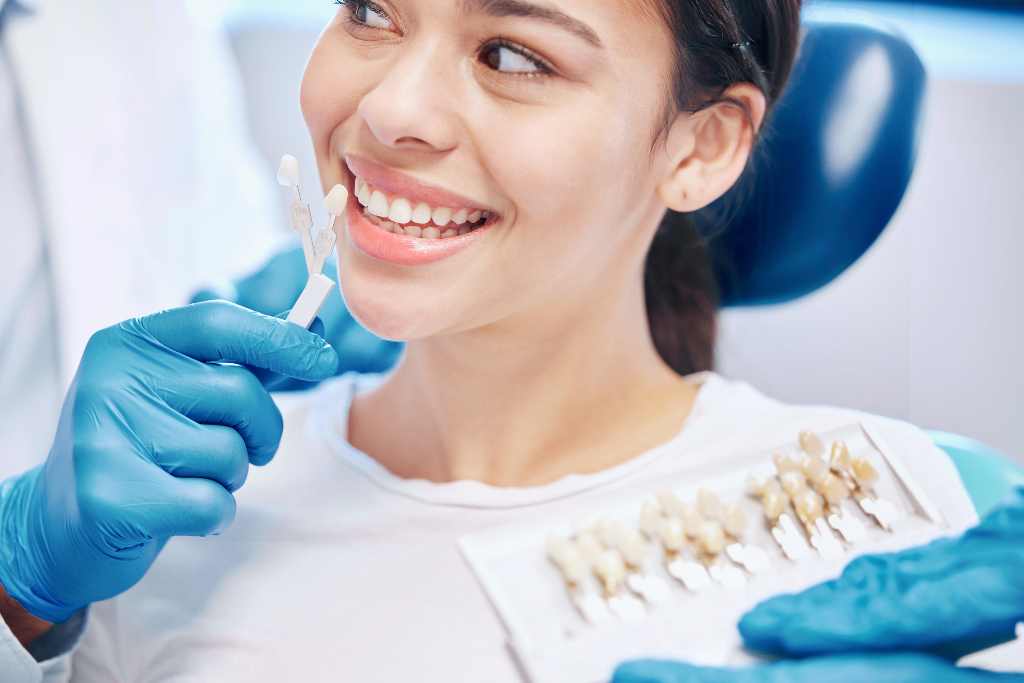
A confident smile can change the way you carry yourself in a job interview, on a first date, or simply in the mirror every morning. Yet millions of Americans live with chips, stains, gaps, and misshapen teeth that make them hesitant to smile freely. If that resonates with you, dental veneers may be the solution you have been looking for.
At Manassas Dental Smiles, we believe every patient deserves a smile that reflects the best version of themselves.
Veneers are one of the most versatile and rewarding cosmetic dental procedures we offer, and in this guide we break down exactly what they are, how the procedure works, who makes an ideal candidate, and what the realistic outcomes look like so you can make a fully informed decision.
What Are Dental Veneers?
Dental veneers are ultra-thin, custom-crafted shells bonded permanently to the front surface of your natural teeth. Think of them as a precisely tailored cover that conceals cosmetic imperfections while preserving the underlying tooth structure. They mimic the light-reflecting properties of natural enamel, which is why results look so lifelike.
The American Academy of Cosmetic Dentistry describes veneers as one of the most aesthetic solutions available in modern dentistry because they address multiple concerns in a single treatment cycle.
Whether you are dealing with deep discolouration that professional whitening cannot resolve, a worn edge from years of grinding, or a gap that makes you self-conscious, veneers offer a durable, predictable fix.
At Manassas Dental Smiles, we fabricate veneers in close collaboration with dental laboratories, ensuring every shell is colour-matched and shaped to complement your facial symmetry and your natural bite.
Types of Veneers: Which Material Is Right for You?
Not all veneers are the same. The material we choose together depends on your aesthetic goals, budget, lifestyle, and the condition of your existing teeth. Here is a breakdown of the most common types:
1. Porcelain Veneers
Porcelain veneers are the gold standard in cosmetic dentistry. They are fabricated by a dental laboratory from high-strength ceramic, producing a translucency and depth of colour that closely mirrors natural tooth enamel. Porcelain is highly resistant to staining from coffee, tea, and red wine, and with proper care, a porcelain veneer can last 10 to 15 years or longer.
The trade-off is that porcelain veneers require the removal of a small amount of enamel, approximately 0.3 to 0.5 millimetres, to ensure the shell sits flush and does not look bulky. This makes the procedure irreversible, which is an important consideration we always discuss with patients at Manassas Dental Smiles before moving forward.
2. Composite Resin Veneers
Composite veneers are applied chair-side, meaning our dentist sculpts the resin directly onto your teeth in a single appointment. They are more affordable and require little to no enamel removal, but they are more prone to staining and typically last five to seven years before a touch-up or replacement is needed.
For patients who want to test the aesthetic outcome before committing to porcelain, or who have budget constraints, composite veneers are an excellent entry point. We can always transition to porcelain at a later stage.
3. No-Prep Veneers
Brands such as Lumineers fall under the no-prep category. These are ultra-thin shells that can sometimes be placed without any enamel reduction at all. They are a strong option for patients who want a reversible solution, though they are not suitable for every clinical situation. Our team at Manassas Dental Smiles will assess whether no-prep veneers can achieve the result you have in mind.
Common Dental Issues Veneers Can Correct
Veneers are one of the most versatile cosmetic treatments available because they address a wide range of aesthetic concerns simultaneously. At Manassas Dental Smiles, we recommend veneers to patients presenting with:
- Severe intrinsic staining that resists professional whitening, such as discolouration caused by tetracycline antibiotics or fluorosis
- Chipped or cracked teeth with intact root structure
- Mild to moderate misalignment or crowding where orthodontics is not desired
- Gaps between teeth (diastema)
- Worn-down teeth due to bruxism or acid erosion
- Irregularly shaped or disproportionately small teeth
- Rough or uneven tooth surfaces
It is important to understand that veneers are a cosmetic intervention, not a restorative one. If you have significant structural damage, active decay, or gum disease, those conditions must be treated first. Our clinical team will conduct a thorough examination before recommending veneers to ensure you are building your new smile on a healthy foundation.
The Veneer Procedure: Step by Step
One of the most common questions we receive at Manassas Dental Smiles is: what does the process actually involve? Here is a transparent walk-through of what to expect.
Step 1: Consultation and Treatment Planning
Your journey begins with a comprehensive consultation. Our dentists take X-rays, assess your bite, examine your gum health, and listen carefully to your smile goals. We use digital smile design tools to show you a preview of your anticipated result before any irreversible steps are taken.
Step 2: Tooth Preparation
For porcelain veneers, a thin layer of enamel is removed from the front surface of each tooth being treated. Local anaesthesia is used to keep you comfortable throughout. Impressions or digital scans are then taken and sent to the dental laboratory.
Step 3: Temporary Veneers
While your permanent veneers are being crafted, typically over one to two weeks, we fit you with temporary veneers so your teeth are protected and you can preview the general aesthetic.
Step 4: Bonding
Once your custom shells arrive, we trial-fit them, make any fine adjustments, and then permanently bond them using a high-strength dental adhesive activated by a curing light. The fit, colour, and bite are all checked meticulously before you leave the chair.
Step 5: Follow-Up
We schedule a follow-up appointment a few weeks after bonding to assess your bite, check for any sensitivity, and ensure you are fully satisfied with the outcome.
Are Veneers Right for You? Candidacy Criteria
Veneers are not universally appropriate for every patient. Based on our clinical experience at Manassas Dental Smiles, you are likely a good candidate if:
- Your teeth and gums are healthy, or you are willing to treat any existing issues first
- You have sufficient enamel remaining for the bonding process to be effective
- Your cosmetic concerns are primarily located on the front teeth
- You do not have severe bruxism, or you are willing to wear a night guard to protect the veneers
- You are committed to good oral hygiene and regular dental check-ups
You may not be the right candidate at this stage if you have active tooth decay or periodontal disease, significant enamel erosion that has compromised the bonding surface, severely misaligned teeth that would better benefit from orthodontic correction first, or if you habitually bite your nails, chew pens, or grind your teeth without protection.
The best way to know for certain is to book a consultation with our team. At Manassas Dental Smiles, we take a conservative and honest approach: we will only recommend veneers when they represent the most appropriate and sustainable treatment for your specific situation.
How Long Do Veneers Last?
Longevity is one of the first practical questions patients ask us, and rightly so. Porcelain veneers, when properly placed and cared for, typically last between 10 and 15 years, with many patients seeing results well beyond that timeframe. Composite veneers generally require replacement or refurbishment every five to seven years.
Factors that extend veneer lifespan include maintaining excellent oral hygiene, attending regular professional cleans at Manassas Dental Smiles, avoiding biting hard objects, wearing a night guard if you grind your teeth, and moderating consumption of staining beverages.
Veneers are not indestructible, but they are highly durable. Porcelain in particular has a hardness comparable to natural enamel, which means it handles normal biting forces well.
Veneers vs. Other Cosmetic Options: How Do They Compare?
Patients often come to us having researched several cosmetic options. Here is how veneers compare to the most common alternatives:
Veneers vs. Teeth Whitening: Whitening is non-invasive and effective for surface and mild intrinsic staining, but it cannot address chips, shape issues, or deep structural discolouration. Veneers cover all of these in one treatment.
Veneers vs. Dental Bonding: Composite bonding is cheaper and reversible, making it ideal for minor repairs. However, it does not offer the same longevity, stain resistance, or natural translucency as porcelain veneers.
Veneers vs. Crowns: Crowns cap the entire tooth and are used for structural restoration. Veneers only cover the front surface and are the better choice when tooth structure is healthy but aesthetics need improvement.
Veneers vs. Orthodontics: Braces or clear aligners correct alignment at its root cause. Veneers can create the appearance of straightness without moving teeth, which is faster but irreversible. For patients with significant bite issues, we often recommend orthodontic treatment first.
Caring for Your Veneers: Aftercare Tips
Protecting your investment starts with everyday habits. Here is what we advise all our veneer patients at Manassas Dental Smiles:
- Brush twice daily with a non-abrasive fluoride toothpaste
- Floss daily and consider using a water flosser for thorough cleaning around the veneer margins
- Rinse with a non-alcoholic mouthwash to avoid weakening the bonding resin over time
- Avoid biting into hard foods such as ice, popcorn kernels, or hard candies directly with your veneered teeth
- Wear a custom night guard if you grind or clench during sleep
- Attend your six-monthly hygiene appointments so we can monitor the veneers and address any early issues before they become costly
Porcelain veneers are stain-resistant, but the resin cement at the margins can discolour slightly over time. Keeping up with professional cleans helps maintain the crispness of the colour.
Why Choose Manassas Dental Smiles for Your Veneers?
When you choose Manassas Dental Smiles, you are choosing a practice that puts honesty, clinical excellence, and patient comfort at the centre of everything we do. Our team, led by Dr. Malik Usman and Dr. Ehab BenNasir, brings extensive experience in cosmetic dentistry. We use modern technology to plan your smile with precision, communicate transparently about what is and is not achievable, and support you at every stage from the first consultation through to long-term aftercare.
We have helped thousands of patients across Manassas, VA transform their smiles in a welcoming, judgement-free environment. Whether you are ready to book or simply want to explore your options, we are here to guide you without pressure.
Visit us at 8559 Sudley Road, Manassas, VA 20110, or call us on (571) 350-9292. You can also book an appointment directly at manassasdentalsmiles.com.
Frequently Asked Questions
Do veneers hurt to get?
The preparation stage involves removing a small amount of enamel, which is done under local anaesthesia so you should not feel any discomfort during the procedure. Some patients experience mild sensitivity for a few days after preparation and again following bonding, but this settles quickly. Our team at Manassas Dental Smiles uses gentle techniques to keep your experience as comfortable as possible.
Are veneers permanent?
Porcelain veneers are considered a permanent commitment because the enamel removal required for placement cannot be reversed. The veneers themselves can be replaced when they reach the end of their lifespan. Composite veneers and some no-prep options are more reversible in nature.
Will my veneers look natural?
Yes, when crafted well. At Manassas Dental Smiles, our veneers are custom-made to match the shade, shape, and translucency of your surrounding teeth. We use digital shade matching and work with specialist laboratories to ensure the result looks and feels completely natural. The goal is always a smile that people notice, not veneers that people spot.
Can I whiten my veneers if they stain?
Porcelain veneers do not respond to conventional whitening treatments in the same way natural enamel does. If staining becomes visible over time, it usually occurs at the bonding margins and is addressed during professional cleaning or, if significant, by replacing the veneer. This is why we recommend whitening your natural teeth before veneer placement so the shade can be matched accordingly.
How many veneers will I need?
This depends entirely on your smile goals. Some patients treat a single damaged tooth, while others opt for a full smile makeover covering the upper front six to eight teeth. During your consultation at Manassas Dental Smiles, we will advise on the minimum number of veneers needed to achieve a balanced, natural-looking result.
Final Thoughts
Dental veneers represent one of the most powerful tools available in modern cosmetic dentistry. They are durable, natural-looking, and capable of addressing a broad spectrum of aesthetic concerns in a relatively short timeframe. But they are also a significant commitment, which is why we always encourage patients to come in for a proper consultation before making any decisions.
At Manassas Dental Smiles, our commitment is simple: to give you the information, the expertise, and the individualised care you need to make the choice that is right for your smile, your health, and your life. If veneers are the answer, we will create them beautifully. If another treatment serves you better, we will tell you that too.
Ready to find out if veneers are right for you? Book your consultation at Manassas Dental Smiles today. Call (571) 350-9292 or visit manassasdentalsmiles.com.