
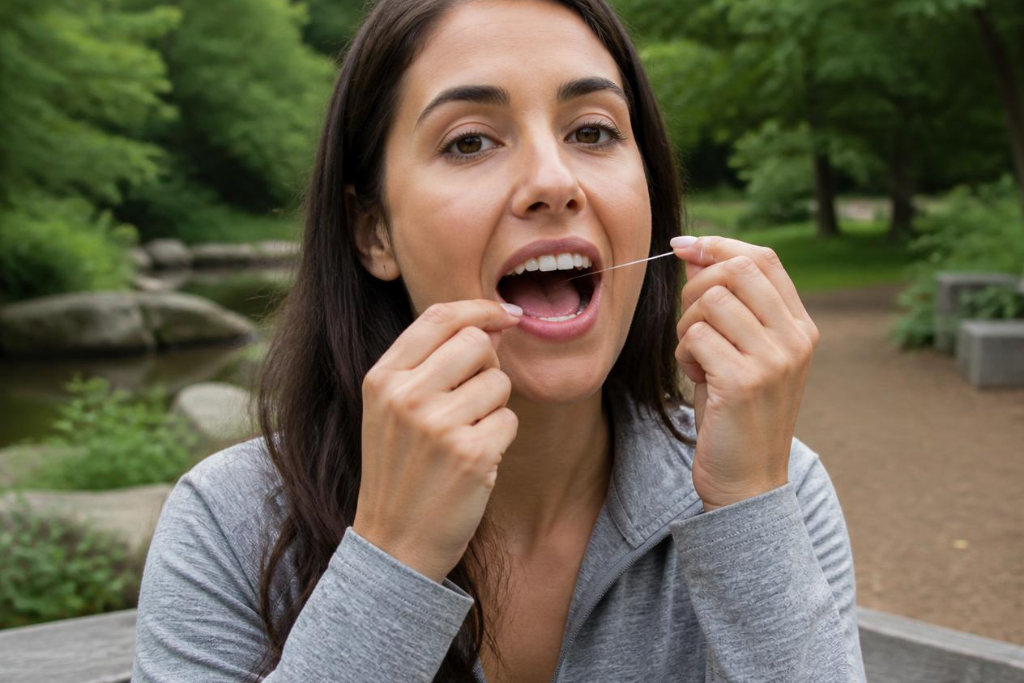
Flossing is one of the simplest ways to improve your daily oral hygiene routine, yet it is also one of the habits many people find difficult to do correctly. You may floss occasionally, use a floss pick, or simply move the floss between your teeth and assume the job is done. However, technique matters.
Your toothbrush cannot effectively reach every surface between your teeth. Cleaning these areas helps remove food particles and plaque that can contribute to tooth decay and gum disease. The American Dental Association recommends cleaning between the teeth daily using floss or another appropriate interdental cleaner.
At Manassas Dental Smiles, we encourage patients to think of flossing as part of a complete oral care routine rather than an optional extra. We can also help you determine which interdental cleaning method best suits your teeth, gums, dental work, and individual needs.
Why Is Flossing Important?
Plaque is a sticky film of bacteria that develops continuously on teeth. While brushing helps clean the front, back, and chewing surfaces of your teeth, toothbrush bristles cannot effectively reach every tight space between them.
Floss and other interdental cleaners are designed to reach these areas. Regular interdental cleaning can help remove plaque and trapped food before plaque hardens into tartar. Once tartar forms, it cannot simply be brushed or flossed away and generally requires professional dental cleaning.
Cleaning between your teeth is therefore important for both your teeth and gums.
A consistent routine can help reduce the accumulation of plaque in areas that are easy to overlook. It is especially important if you have crowded teeth, spaces between teeth, orthodontic appliances, dental restorations, or a history of gum problems.
How Often Should You Floss?
For most people, cleaning between the teeth once a day is recommended.
The best time is the time you can consistently maintain. Some people prefer flossing before bed so their teeth and gums are clean overnight. Others prefer to floss in the morning or after lunch.
At Manassas Dental Smiles, we would rather see you establish a thorough daily routine that works for you than choose a theoretically perfect time that you rarely follow.
How to Floss Properly: Step by Step
Step 1: Choose the Right Floss
Traditional dental floss is not your only option.
Depending on your teeth and oral health needs, you may use:
- Traditional dental floss
- Dental tape
- Floss picks
- Floss threaders
- Interdental brushes
- Water flossers
The ADA notes that different interdental cleaning devices can be appropriate for different patients. For example, traditional floss may work well in tight spaces, while interdental brushes can be useful where spaces are more open.
If you are unsure which option is right for you, ask us at your next appointment.
Step 2: Use Enough Floss
If you are using traditional floss, take approximately 18 inches of floss.
Wind most of the floss around the middle finger of one hand and the remainder around the middle finger of the other hand. Leave a few inches between your hands so you have enough working length.
Use your thumbs and index fingers to control the floss.
Step 3: Gently Guide the Floss Between Your Teeth
Do not snap the floss aggressively into your gums.
Instead, use a gentle back-and-forth motion to guide it through the contact point between your teeth.
If your teeth are particularly tight, patience is important. Forcing the floss can irritate the gums or cause discomfort.
Step 4: Curve the Floss Around One Tooth
This is one of the most important parts of proper flossing.
Once the floss reaches the gumline, curve it around one tooth so it forms a gentle C shape.
Gently slide the floss up and down against the side of the tooth.
The goal is to clean the side of the tooth and the area just beneath the gumline without cutting or forcing the floss into the tissue.
Step 5: Clean the Other Side
Do not stop after cleaning one tooth surface.
Move the floss against the neighbouring tooth and repeat the same C-shaped motion.
Each space between two teeth has two tooth surfaces, so both sides need attention.
Step 6: Move to a Clean Section
As you progress around your mouth, use a clean section of floss for each area.
This helps prevent moving plaque and debris from one area to another.
Step 7: Do Not Forget the Back Teeth
The back teeth are often harder to reach and can be easy to overlook.
Take your time around your molars and work carefully around the gumline.
If traditional floss is difficult to manoeuvre around your back teeth, a floss pick, water flosser, or another interdental device may be easier to use.
Should You Floss Before or After Brushing?
Either approach can work as long as you clean thoroughly.
The ADA states that both brushing before flossing and flossing before brushing are acceptable. Some people prefer to floss first because it helps dislodge material between the teeth before brushing.
The most important factor is consistency.
At Manassas Dental Smiles, we can help you build a routine that fits naturally into your day.
What If Your Gums Bleed When You Floss?
Some people notice bleeding when they first start flossing regularly.
Bleeding can occur when the gums are inflamed, particularly when plaque has accumulated around the gumline. However, persistent or significant bleeding should not simply be ignored.
If your gums regularly bleed, feel swollen, appear red, or are tender when you clean between your teeth, schedule a dental examination.
We can evaluate your gums, identify potential causes, and recommend an appropriate home-care routine.
Common Flossing Mistakes to Avoid
Using Too Much Force
Flossing should not feel like you are cutting into your gums. Use controlled, gentle movements.
Only Cleaning Between the Front Teeth
Your back teeth need attention too. Make your way around the entire mouth.
Moving the Floss Straight Up and Down Without Following the Tooth
Simply pushing floss between two teeth does not thoroughly clean their surfaces. Curve the floss around each tooth.
Stopping When Your Gums Bleed
Bleeding can be a sign that your gums need more attention. If it continues despite a consistent and gentle routine, let us know.
Reusing Floss
The ADA does not recommend reusing interdental cleaning products. Used floss can fray and may be less effective.
Assuming Flossing Replaces Dental Visits
Home care and professional dental care work together.
Even an excellent brushing and flossing routine cannot replace dental examinations and professional cleanings when they are recommended for your needs.
Are Floss Picks as Good as Traditional Floss?
Floss picks can be a practical option, particularly if you find traditional floss difficult to handle.
The important point is whether the product allows you to clean effectively between your teeth and along the gumline.
If a floss pick helps you maintain daily interdental cleaning, it may be preferable to having traditional floss available but rarely using it.
For some patients, however, another tool may be more appropriate. We can assess your mouth and recommend an option based on your individual circumstances.
What About Water Flossers?
Water flossers use a stream of water to clean around and between teeth.
They can be useful for people who find traditional floss difficult to manage, including some patients with orthodontic appliances or other dental considerations.
However, the best interdental cleaning method varies from person to person.
Rather than choosing a product because it is popular online, ask your dental team which method makes sense for your specific needs.
How We Can Help You Improve Your Oral Hygiene
At Manassas Dental Smiles, we believe prevention starts with practical information.
During your dental visits, we can assess your teeth and gums, discuss your home-care habits, and demonstrate techniques that may make brushing and interdental cleaning easier.
Our approach focuses on personalised dental care rather than assuming every patient needs exactly the same routine.
We provide general dentistry and preventive and restorative oral healthcare, with treatment recommendations tailored to individual needs.
If you have questions about flossing, gum bleeding, plaque buildup, sensitivity, or choosing an interdental cleaner, we are here to help.
When Should You See a Dentist?
Book a dental appointment if you experience:
- Persistent gum bleeding
- Swollen or painful gums
- Loose teeth
- Persistent bad breath
- Tooth sensitivity
- Toothache
- Pain when chewing
- Changes in the appearance of your gums
- A broken or damaged tooth
Some oral health problems can progress without obvious symptoms, which is why regular dental care remains important even when your teeth feel fine.
At Manassas Dental Smiles, our goal is to help you maintain a healthy smile through appropriate preventive care and personalised treatment.
Frequently Asked Questions
Is flossing really necessary if I brush twice a day?
Yes. Brushing and interdental cleaning serve different purposes. Toothbrush bristles cannot effectively clean every space between teeth, so daily interdental cleaning is an important part of oral hygiene.
How long should flossing take?
There is no fixed number of minutes that works for everyone. Focus on cleaning between all your teeth carefully rather than rushing through the process.
Is it normal for flossing to hurt?
Flossing should not cause significant pain. If your gums repeatedly hurt or bleed during flossing, speak with your dentist so the cause can be evaluated.
Can I floss with braces?
Yes, but traditional floss may require a floss threader or another technique. Interdental brushes and water flossers may also be useful depending on your orthodontic setup. Ask your dental professional for personalised guidance.
What is the best type of floss?
There is no single type that is best for everyone. Waxed and unwaxed floss can both be effective. The best choice is one that fits your teeth comfortably and allows you to clean thoroughly.
Should I floss every day?
Daily interdental cleaning is recommended. The ADA recommends cleaning between your teeth once a day using floss or another appropriate interdental cleaner.
Can flossing remove tartar?
No. Floss can remove plaque and food debris, but hardened tartar requires professional dental cleaning.
Can Manassas Dental Smiles show me how to floss?
Yes. If you are unsure about your technique, ask us during your next dental visit. We can provide personalised guidance based on your teeth and gum health.