
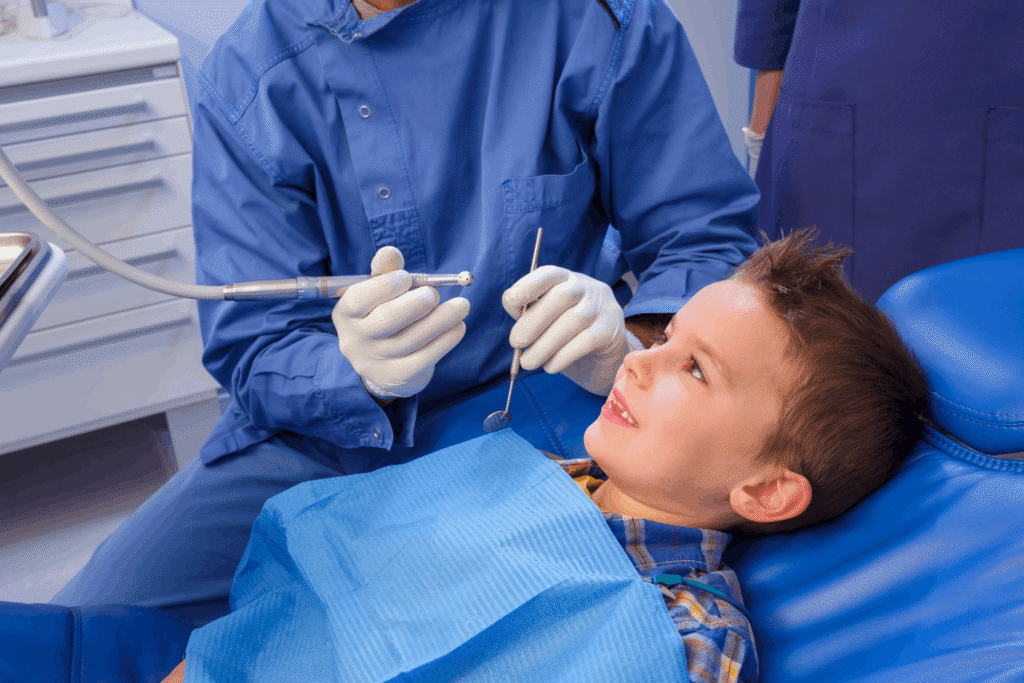
Your child’s first dental visit is a major milestone — and at Manassas Dental Smiles, we know it can feel like a big moment for parents too. That first experience helps shape how your child feels about the dentist for years to come. A calm, positive introduction can set the foundation for a lifetime of healthy smiles.
If you’re wondering when to schedule, how to prepare, and what to expect, this guide will walk you through every step so you can feel confident walking into your child’s first appointment.
When Should My Child First See the Dentist?
Most dental guidelines recommend scheduling your child’s first visit by age one or within six months of their first tooth appearing. Many parents are surprised to hear that the dentist should be involved so early — but these first visits are focused on prevention and education, not treatment.
Early visits allow us to:
- Monitor tooth and jaw development
- Identify early signs of baby bottle decay
- Provide guidance on teething and brushing
- Discuss thumb-sucking, pacifiers, and nutrition
Even if your child is older and hasn’t had a dental visit yet, it’s never too late to begin. The most important step is establishing a dental home where your child feels comfortable and supported.
Step 1: Choose the Right Dentist — and the Right Time
Find a child-friendly dental home
Look for a dental practice that welcomes children and uses gentle, reassuring communication.
At Manassas Dental Smiles, we tailor our approach to your child’s age, personality, and comfort level. We aim to build a long-term relationship with your family — not just treat problems when they arise.
Schedule at the best time of day
Timing can significantly influence how the visit goes. Try to:
- Choose a time when your child is well-rested
- Avoid nap time or late afternoons
- Make sure they’ve had a light meal beforehand
- Allow extra time so you’re not rushed
A relaxed parent and a rested child often lead to a smoother, more positive appointment.
Step 2: Talk About the Dentist in a Positive Way
Children mirror their parents’ emotions. If you sound nervous, they may assume there’s something to fear. A few weeks before the visit, begin introducing the idea casually and positively.
You can say things like:
- “The dentist helps keep your teeth strong and shiny.”
- “They’re going to count your teeth.”
- “We’re going to check your super smile!”
Avoid words like “hurt,” “shot,” “pull,” or “drill,” even if you’re trying to reassure them. Keeping language simple and upbeat makes a big difference.
Reading children’s books about dental visits or watching short educational cartoons can also help make the experience feel familiar.
Step 3: Play “Dentist” at Home
Role-playing is one of the most effective ways to reduce fear of the unknown. When your child turns the dentist into a game, the real appointment feels less intimidating.
Try these activities:
- Let your child count your teeth with a toothbrush
- Switch roles and gently “count” their teeth
- Practice opening wide in the mirror
- Pretend to check a stuffed animal’s smile
These small exercises help your child feel prepared and in control.
Step 4: Bring Comfort and Set the Tone
On the day of the appointment:
- Bring a favorite toy or blanket
- Dress your child in comfortable clothing
- Offer a light, tooth-friendly snack beforehand
- Stay calm and relaxed yourself
If your child has sensory sensitivities, anxiety, or special needs, let our team know when scheduling. We’re happy to adjust lighting, pacing, or approach to help them feel secure.
What to Expect at Manassas Dental Smiles
Understanding what will happen can ease anxiety for both you and your child. A first dental visit typically includes:
1. A Warm Welcome
Our team greets your family and helps your child feel comfortable in the office environment.
2. Gentle Introductions
We explain everything using child-friendly language. Phrases like “counting your teeth” or “looking with a tiny mirror” help reduce fear.
3. A Comfortable Exam
Depending on age and comfort level, your child may sit in the chair independently or on your lap. We check teeth, gums, bite development, and oral health. If your child is comfortable, a gentle cleaning or fluoride treatment may be performed.
4. Parent Education
We discuss:
- Proper brushing and flossing techniques
- Fluoride use and toothpaste amounts
- Healthy snack and drink choices
- Thumb-sucking or pacifier concerns
5. Encouragement and Praise
We celebrate cooperation, no matter how small. A sticker or small reward often helps your child leave feeling proud.
Our goal is not just to examine teeth — it’s to build trust.
Creating Healthy Habits at Home
After the first visit, reinforce good habits at home:
- Brush twice daily with a soft-bristled toothbrush
- Use a smear of fluoride toothpaste for children under 3
- Use a pea-sized amount for children 3 and older
- Supervise brushing until around age 7–8
- Offer water between meals
- Limit sugary snacks and drinks
When home routines are consistent, future visits become easier and more comfortable.
If Things Don’t Go Perfectly — That’s Okay
It’s completely normal for some children to cry, cling, or refuse to open their mouths at first. We expect it. Building comfort can take time, and sometimes progress happens gradually over a few visits.
At Manassas Dental Smiles, patience is part of our approach. We work at your child’s pace.
Why Families Choose Manassas Dental Smiles
Families in Manassas, VA choose our office because we combine clinical expertise with genuine compassion. We:
- Speak in age-appropriate language
- Take time to understand your child’s personality
- Provide judgment-free guidance for parents
- Focus on long-term oral health, not just quick visits
We’re proud to support families throughout Manassas and surrounding communities as children grow into confident, healthy adults.
If you’re ready to schedule your child’s first dental visit, contact Manassas Dental Smiles through our website or call our office to find an appointment time that works for your family.
FAQs: Your Child’s First Dental Visit
1. What age should my child first see the dentist?
By age one or within six months of the first tooth appearing. Early visits help prevent problems and build comfort.
2. How can I reduce my child’s fear of the dentist?
Use positive language, role-play at home, bring a comfort item, and choose a time when your child is rested.
3. Will my child get X-rays at the first visit?
Young children often do not need X-rays unless there’s a concern. We only recommend them when necessary and safe.
4. What if my child cries during the visit?
Crying is normal. Our team uses gentle techniques and may take a gradual approach if needed.
5. How often should my child see the dentist afterward?
Most children benefit from visits every six months. If your child has higher cavity risk, we may recommend more frequent checkups.