
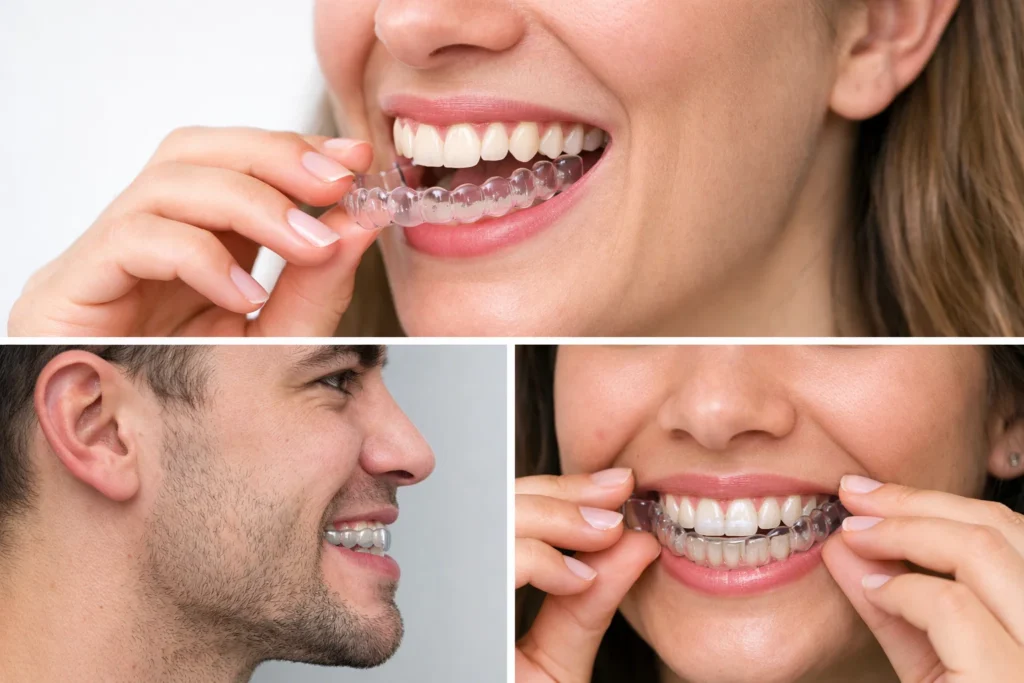
A clear, honest guide from our dental team in Manassas, VA
At Manassas Dental Smiles, we hear this question almost every week: “Can Invisalign really fix my bite — not just straighten my teeth?” The short answer is yes — but like most things in dentistry, the details matter. In this guide, we walk you through exactly how Invisalign works for overbites, underbites, and crossbites, what results you can realistically expect, and how we approach bite correction right here in Manassas, VA.
Understanding the Three Most Common Bite Problems
Before we explore what Invisalign can do, it helps to understand what we are actually correcting. Bite problems — called malocclusions in clinical terms — are extremely common.
The American Dental Association estimates that the majority of people have some degree of misalignment. Here in our Manassas practice, we see all three of the major bite types regularly.
Overbite
The upper front teeth overlap significantly over the lower teeth — sometimes called “buck teeth.” Mild overbites are normal; larger ones cause wear, jaw pain, and gum problems.
Underbite
The lower jaw juts forward so the lower teeth sit in front of the upper teeth when the mouth is closed. This can cause chewing difficulty and uneven tooth wear.
Crossbite
Some upper teeth sit inside the lower teeth instead of outside. It can affect one tooth or multiple teeth and may lead to asymmetrical jaw growth if left untreated.
Each of these issues is more than cosmetic. Left untreated, they can contribute to jaw joint (TMJ) problems, chronic headaches, difficulty chewing, excessive tooth wear, and even speech difficulties. We take bite health seriously at Manassas Dental Smiles because correcting these problems protects far more than your smile — it protects your long-term oral health.
How Invisalign Works — and Why It Is More Than Just Teeth Straightening
Invisalign uses a series of custom-made, BPA-free clear aligners that gradually shift your teeth into the desired position. Each set of aligners is worn for one to two weeks before advancing to the next in the series.
The entire treatment plan is mapped out digitally in advance using advanced 3D imaging technology — so we can show you your projected results before you even begin.
What many people do not realize is that Invisalign has evolved significantly from its early days of only fixing mild crowding and spacing. Modern Invisalign — especially with the use of small tooth-colored attachments called buttons — can exert far more complex forces on the teeth and jaw.
These attachments give the aligners the grip they need to tackle rotations, intrusions, extrusions, and the kinds of movements required to correct bite problems.
We are certified Invisalign providers in Manassas, VA. That means we not only fit your aligners — we design your entire treatment plan using clinical expertise to ensure your bite correction is effective and long-lasting.
Can Invisalign Fix an Overbite?
Yes — and this is one of the areas where Invisalign has made tremendous strides. An overbite occurs when there is too much vertical overlap between the upper and lower front teeth.
Invisalign addresses this by using a combination of aligner movements and, when needed, small elastics (rubber bands) that connect between upper and lower aligners to guide jaw positioning.
What We Can Correct with Invisalign:
Mild to moderate overbites — the most common scenario — respond very well to Invisalign treatment. We use precision bite ramps built into the aligners to help open the bite gradually and allow the back teeth to properly support the jaw. For patients whose overbite is driven more by the position of teeth than the underlying jaw structure, Invisalign is an excellent solution.
Severe skeletal overbites (where the upper jawbone itself is significantly forward) may require additional intervention — sometimes orthognathic surgery in extreme cases. We will always be upfront with you during your consultation.
If Invisalign alone cannot achieve your goals, we will say so and discuss the full picture.
In our experience with patients across Manassas and Northern Virginia, the majority of overbite cases we see fall into the mild-to-moderate category and are very well-suited to Invisalign correction.
Can Invisalign Fix an Underbite?
Underbites are one of the more challenging bite problems to correct, and we want to be honest with you about what Invisalign can and cannot do here. The answer depends significantly on what is causing the underbite.
Dental Underbites vs. Skeletal Underbites
A dental underbite — where the teeth are positioned incorrectly but the jaw size and shape are relatively normal — can often be corrected successfully with Invisalign, particularly in younger patients whose jaws are still developing. For adults with dental underbites, Invisalign combined with interarch elastics can achieve meaningful improvement.
A skeletal underbite — where the lower jaw is structurally larger or more forward than the upper — is more complex. Invisalign may improve the appearance and function, but severe skeletal underbites in adults often benefit from a combination of orthodontic treatment and jaw surgery to achieve a stable, long-term result.
We will examine your X-rays, take detailed measurements, and give you an honest assessment during your consultation at our Manassas, VA office. No guesswork — just clear, evidence-based guidance.
Can Invisalign Fix a Crossbite?
Crossbites are one of the bite problems where Invisalign performs particularly well. Whether you have a front crossbite (anterior) or a back crossbite (posterior), the clear aligner system can move individual teeth or groups of teeth into the correct position with impressive accuracy.
We use attachments — small, tooth-colored composite dots bonded to specific teeth — to give the aligners leverage for the precise movements required in crossbite correction. Invisalign’s SmartTrack material is also engineered to deliver consistent, controlled forces across each aligner change.
For patients with a single-tooth crossbite, treatment can be relatively swift — sometimes under a year. More complex multi-tooth crossbites may take longer, but the result is a properly aligned bite that prevents uneven wear, jaw strain, and asymmetrical facial development.
Invisalign vs. Traditional Braces for Bite Correction
We offer both options at Manassas Dental Smiles, and we will always recommend the treatment that is genuinely best for your specific situation. Here is how the two compare:
- Visibility: Invisalign is nearly invisible. Traditional braces use visible metal brackets.
- Comfort: Invisalign uses smooth plastic with no wires. Braces can irritate the cheeks and gums.
- Removability: Invisalign can be removed to eat and clean. Braces are fixed 24/7.
- Complex bite cases: Invisalign excels for mild–moderate cases. Traditional braces may be preferred for very severe cases.
- Oral hygiene: It’s easier to brush and floss with Invisalign. Braces make cleaning more challenging.
- Treatment time: Invisalign typically takes 12–24 months. Traditional braces typically last 18–36 months.
- Office visits: Invisalign requires fewer frequent check-ins. Braces need monthly adjustments.
For many of our adult patients in Manassas, the near-invisibility and comfort of Invisalign is a major factor. Invisalign lets you correct your bite on your own terms — without anyone noticing during meetings, family dinners, or social events.
How We Approach Invisalign Treatment at Manassas Dental Smiles
We follow a careful, step-by-step process to ensure your Invisalign treatment is designed for success — not just speed. Here is what to expect when you come to us for bite correction:
- Comprehensive Bite Evaluation — We take full digital X-rays, 3D scans, and photographs to understand not just the position of your teeth, but the underlying jaw structure and bite relationships.
- Custom ClinCheck Treatment Plan — Using Invisalign’s ClinCheck software, we map out every aligner movement digitally. You can preview your smile progression before treatment begins.
- Attachment Placement (If Needed) — For bite correction cases, we often place small, tooth-colored attachments that help the aligners apply the exact forces needed.
- Regular Progress Check-ins — We schedule periodic appointments to ensure your teeth are tracking correctly and to make any mid-course refinements.
- Retention and Long-Term Results — Once active treatment is complete, we provide custom retainers to hold your bite in its new position permanently.
Who Is a Good Candidate for Invisalign Bite Correction in Manassas, VA?
Invisalign works best for patients who are committed to wearing their aligners for the recommended 20 to 22 hours per day. Beyond compliance, good candidates typically include:
- Adults and teens with mild to moderate overbites, underbites, or crossbites
- Patients whose bite issues are primarily dental (not severe skeletal) in nature
- People who want a discreet, removable treatment option
Those who have good baseline oral health — no active gum disease or untreated decay
Patients who have completed their jaw growth (typically adults and teens over 14–15)
If we find that your case is too complex for Invisalign alone, we will discuss all available alternatives — including traditional braces or combination approaches — so you can make a fully informed decision. Honest guidance is always our priority.
As a trusted dental practice in Manassas, VA, we understand the needs of our community — from busy professionals in Prince William County to families throughout Northern Virginia. We offer flexible scheduling, personalized care, and transparent pricing so nothing gets in the way of your best smile.
What to Realistically Expect from Invisalign Bite Correction
We believe in setting realistic expectations because they lead to better experiences and better outcomes. Here is what you should know going in:
Treatment Takes Time
Bite correction is not instantaneous. Most patients with overbite, underbite, or crossbite concerns complete treatment between 12 and 24 months, depending on complexity. We do not rush the process — moving teeth and changing bite relationships requires patience and precision.
You May Need Elastics
Many bite correction cases require interarch rubber bands worn between upper and lower aligners. These add a small element of visibility but are an important tool for guiding jaw positioning — and most patients adapt to them quickly.
Results Are Highly Predictable
The digital planning tools behind Invisalign have become extraordinarily accurate. In our experience, patients who follow the wear schedule and attend their check-in appointments achieve results that closely match the original ClinCheck projection.
Retention Is Forever
We say this kindly, but firmly: once your treatment is done, you must wear your retainers as directed. Teeth have a natural tendency to shift back, especially after bite correction. Retainers protect the investment you have made in your smile.
Frequently Asked Questions About Invisalign & Bite Correction
Can Invisalign fix a severe overbite?
Invisalign can effectively treat mild to moderate overbites. Severe overbites may require additional orthodontic support or, in rare cases, a combination of Invisalign and other appliances. We assess your bite thoroughly at your initial consultation and provide an honest recommendation tailored to your specific anatomy.
How long does Invisalign take to fix a crossbite?
Treatment time varies based on the severity of the crossbite, but most patients see significant correction within 12 to 18 months. Mild single-tooth crossbites can resolve faster. We provide a customized timeline during your consultation at Manassas Dental Smiles.
Is Invisalign painful for bite correction?
Most patients experience mild pressure or discomfort when switching to a new set of aligners — this is a sign the aligners are working. This sensation typically fades within a day or two. Overall, Invisalign is significantly more comfortable than traditional braces.
Does insurance cover Invisalign in Manassas, VA?
Many dental insurance plans that include orthodontic benefits will contribute toward Invisalign treatment. We recommend calling your provider or contacting our team at (571) 350-9292 to verify your specific benefits before you commit to treatment.
Am I a good candidate for Invisalign?
Most adults and teens with mild to moderate bite and alignment issues make excellent Invisalign candidates. The best way to know for certain is to schedule a consultation — we will give you a clear, honest answer based on your actual X-rays and clinical examination.
Ready to Fix Your Bite? Let's Start with a Conversation.
We are accepting new patients at our Manassas, VA office. Schedule a consultation and we will evaluate your bite, answer every question you have, and tell you honestly whether Invisalign is the right fit for you.
Book Online: manassasdentalsmiles.com
Call Us: (571) 350-9292
Email: care@manassasdentalsmiles.com
Address: 8559 Sudley Road, Manassas, VA 20110